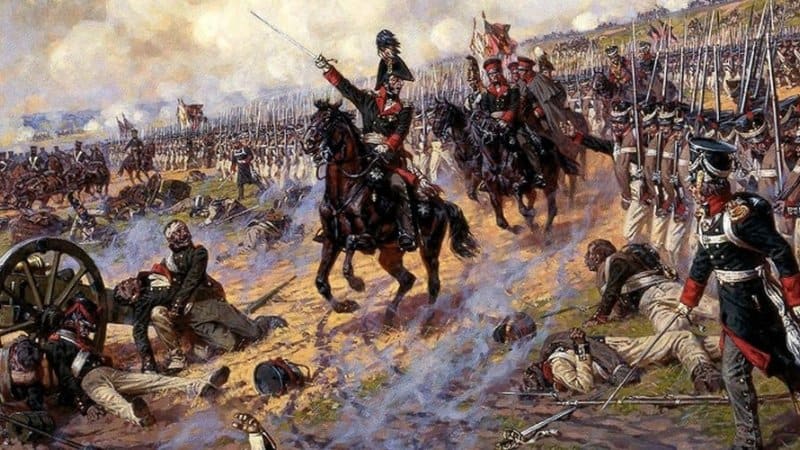
On 7 September 1812, about seventy miles west of Moscow, some 250,000 men fought the bloodiest single day of the entire Napoleonic era. By nightfall around 70,000 lay dead or wounded. Napoleon held the field at Borodino, yet the victory would help destroy him.
The road to Moscow
Napoleon had invaded Russia in June with the largest army Europe had ever assembled. The Russians refused the great battle he needed, trading space for time and burning the land behind them. At last, to shield Moscow, General Kutuzov turned and dug in on the low ridges around the village of Borodino.
The redoubts
The day became a grinding assault on Russian earthworks: the Bagration flèches and the great Raevsky redoubt. Both sides fed men and guns into the same few hundred yards for hours. Nearly a thousand cannon turned the center into a furnace that veterans would remember for the rest of their lives.
Napoleon won the ground and lost the campaign. He would not offer battle again before the snows came.
The Guard that never moved
By late afternoon the Russians had been pushed back but not broken. Napoleon, far from home and unwilling to gamble his last reserve, refused to commit the Imperial Guard for the killing blow. Kutuzov's army withdrew in good order, still an army.
What the day decided
A week later Napoleon entered Moscow, only to find it abandoned and soon in flames. No peace came. When he finally ordered the retreat, winter, hunger and the Cossacks did what the Russians had not managed at Borodino. The bloodiest day of the wars had been, for Napoleon, a victory in name alone.
Frequently asked questions
Why did Napoleon's victory at Borodino in 1812 help destroy him?
At Borodino in 1812 Napoleon held the field, but Kutuzov's army withdrew in good order and was still an army. A week later Napoleon entered an abandoned, burning Moscow, no peace came, and the retreat that followed was ruined by winter, hunger and the Cossacks, making the bloodiest day of the wars a victory in name alone.
Why did Napoleon refuse to commit the Imperial Guard at Borodino in 1812?
By late afternoon at Borodino in 1812 the Russians had been pushed back but not broken, and Napoleon, far from home and unwilling to gamble his last reserve, refused to send in the Imperial Guard for the killing blow. As a result Kutuzov's army was able to withdraw intact.
When and where was the Battle of Borodino fought, and how costly was it?
The Battle of Borodino was fought on 7 September 1812 west of Moscow between Napoleon's France and Kutuzov's Russia. With some 250,000 men engaged and around 70,000 dead or wounded by nightfall, it was the bloodiest single day of the Napoleonic era.
What was the fighting at Borodino in 1812 like?
The Battle of Borodino in 1812 became a grinding assault on Russian earthworks such as the Bagration fleches and the great Raevsky redoubt, with both sides feeding men and guns into the same few hundred yards for hours. Nearly a thousand cannon turned the centre into a furnace that veterans remembered for the rest of their lives.
Was Borodino in 1812 really a victory for Napoleon?
Napoleon held the ground at Borodino in 1812, but it proved a victory in name alone because he lost the campaign rather than the enemy army. He would not offer battle again before the snows came, and the invasion of Russia ended in disaster.
Who won the Battle of Borodino?
The Battle of Borodino in 1812 was a costly French tactical victory in which Napoleon held the field, but Kutuzov's Russian army withdrew intact, and the outcome proved a victory in name alone that helped doom the invasion of Russia.
Take command at Borodino
Borodino is one of 40 battles in Echoes of Battle, told scene by scene, with a real-time tactical mode in the works, and pinned to the real ground before Moscow.