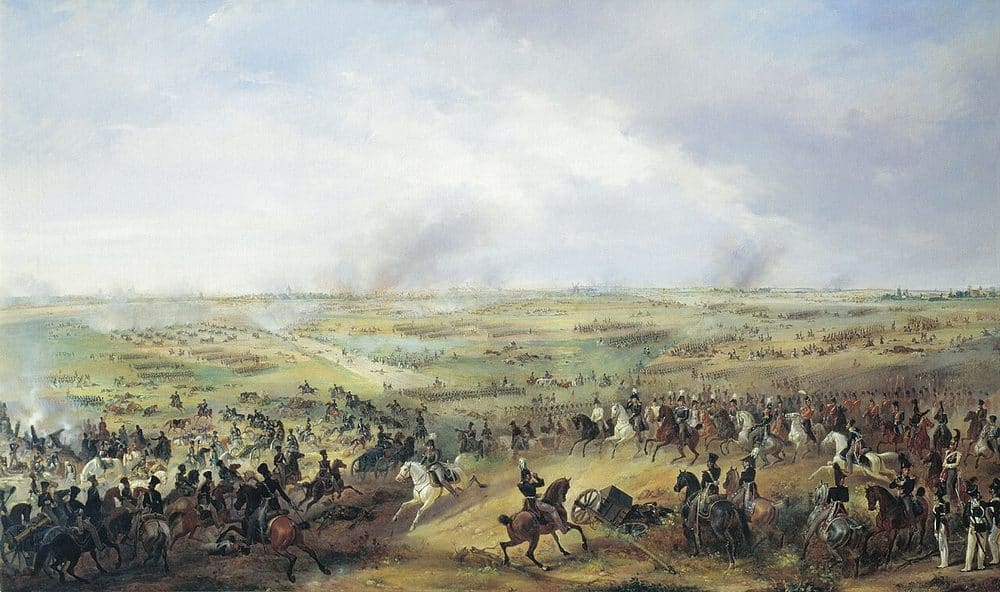
Between 16 and 19 October 1813, around the Saxon city of Leipzig, roughly 600,000 soldiers from a dozen nations fought the largest battle Europe would see until the First World War. When it ended, Napoleon's empire east of the Rhine had ceased to exist. Contemporaries called it simply the Battle of the Nations.
After the snows of Russia
The catastrophe of 1812 had swallowed the Grande Armée, yet Napoleon raised a fresh army of raw conscripts and won again at Lützen and Bautzen in the spring of 1813. Then Austria joined Russia, Prussia and Sweden. The coalition adopted a shrewd plan: avoid Napoleon in person, and strike wherever his marshals commanded alone.
The ring closes
By October the allied armies were converging on Leipzig from every side. Napoleon held the center against odds that grew by the hour as fresh coalition columns arrived. On the second day the numbers turned decisively against him, and during the fighting his German allies from Saxony changed sides on the field itself.
Six hundred thousand men from a dozen nations. When the smoke cleared, an empire had lost its grip on a continent.
The bridge over the Elster
With the battle lost, the French began a careful retreat westward across the single causeway out of the city. In the chaos the vital bridge over the Elster was blown too early, stranding the rearguard on the wrong bank. Thousands were captured or drowned, among them Marshal Józef Poniatowski, who had received his baton only three days before, on the first day of the battle.
What the day decided
Leipzig cost well over 100,000 casualties on both sides. Napoleon fell back over the Rhine, the Confederation of the Rhine dissolved, and Germany was lost to him for good. Within months the allies were in France, and the road ran on to his first abdication in the spring of 1814.
Frequently asked questions
Why is the Battle of Leipzig in 1813 called the Battle of the Nations?
The Battle of Leipzig in 1813 drew roughly 600,000 soldiers from a dozen nations and was the largest battle Europe would see until the First World War, which is why contemporaries called it simply the Battle of the Nations. When it ended, Napoleon's empire east of the Rhine had ceased to exist.
What coalition strategy helped defeat Napoleon at Leipzig in 1813?
Before the Battle of Leipzig in 1813 the coalition of Austria, Russia, Prussia and Sweden adopted a shrewd plan to avoid Napoleon in person and strike wherever his marshals commanded alone. At Leipzig the allies converged from every side, the numbers turned decisively on the second day, and his Saxon allies changed sides on the field.
When and where was the Battle of Leipzig fought, and who took part?
The Battle of Leipzig was fought from 16 to 19 October 1813 around the Saxon city of Leipzig, between Napoleon's France and the Sixth Coalition of Austria, Russia, Prussia and Sweden.
What happened at the bridge over the Elster at Leipzig in 1813?
During the French retreat from the Battle of Leipzig in 1813 the vital bridge over the Elster was blown too early, stranding the rearguard on the wrong bank. Thousands were captured or drowned, among them Marshal Jozef Poniatowski, who had received his baton only three days before, on the first day of the battle.
What were the consequences of the Battle of Leipzig in 1813?
After the Battle of Leipzig in 1813 Napoleon fell back over the Rhine, the Confederation of the Rhine dissolved, and Germany was lost to him for good. Within months the allies were in France, and the road ran on to his first abdication in the spring of 1814.
Who won the Battle of Leipzig?
The Battle of Leipzig in 1813, known as the Battle of the Nations, was a decisive defeat for Napoleon's France at the hands of the Sixth Coalition of Austria, Russia, Prussia and Sweden, after which his empire east of the Rhine collapsed.
How many people died at the Battle of Leipzig?
The Battle of Leipzig in 1813 cost well over 100,000 casualties on both sides combined, killed and wounded, making it the largest battle in Europe until the First World War.
Take command at Leipzig
Leipzig is one of 40 battles in Echoes of Battle, told scene by scene, with a real-time tactical mode in the works, and pinned to the real ground where the nations met.