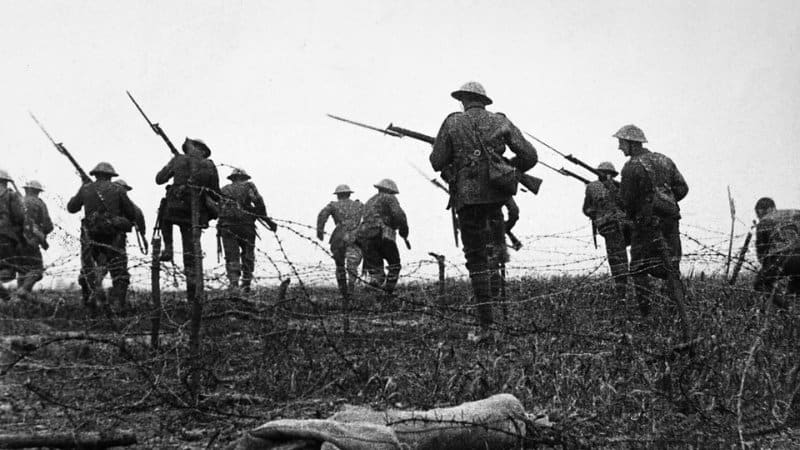
From 1 July to 18 November 1916, along the river Somme in northern France, one of the largest and costliest battles in history ground on for four and a half months. It gained a few miles of shattered ground at a cost of around a million killed and wounded, and it has stood ever since as the symbol of the First World War's industrial slaughter.
The plan
The Somme was meant to be the great Anglo-French push that would break the German line, and also to draw pressure away from the French bleeding at Verdun. A bombardment of unheard-of size hammered the German trenches for a week. Yet much of the wire was left uncut and the deep German dugouts survived.
The first day
On 1 July the British infantry climbed from their trenches and advanced into machine-gun fire. By nightfall they had suffered around 57,000 casualties, some 19,000 of them dead, the bloodiest single day in the history of the British army.
Nearly sixty thousand fell in a single day, and the battle had months yet to run.
Months of attrition
The offensive did not stop. Through the summer and autumn the advance was measured in yards, village by ruined village. On 15 September, at Flers-Courcelette, a new weapon crawled across no man's land for the first time: the tank.
What the day decided
When the fighting finally died in the November mud, the front had barely moved. But the German army had been worn down as never before, and its commanders admitted the losses could not be replaced. The Somme changed how the world imagined war, and the memory of its first day has never faded.
Frequently asked questions
Why is the Battle of the Somme remembered as a symbol of industrial slaughter?
The Battle of the Somme in 1916 gained only a few miles of shattered ground at a cost of around a million killed and wounded, and it has stood ever since as the symbol of the First World War's industrial slaughter.
What went wrong with the plan on the Somme?
On the Somme in 1916 a bombardment of unheard-of size hammered the German trenches for a week, yet much of the wire was left uncut and the deep German dugouts survived, so the infantry advanced into defences that were still intact.
Why was the first day of the Somme so catastrophic?
On the first day of the Somme, 1 July 1916, the British infantry advanced into machine-gun fire and suffered around 57,000 casualties, some 19,000 of them dead, the bloodiest single day in the history of the British army.
What new weapon first appeared on the Somme?
During the Battle of the Somme in 1916, at Flers-Courcelette on 15 September, the tank crawled across no man's land for the first time in history.
What did the Battle of the Somme actually achieve?
When the Somme ended in November 1916 the front had barely moved, but the German army had been worn down as never before and its commanders admitted the losses could not be replaced.
Who won the Battle of the Somme?
The Battle of the Somme in 1916 was an indecisive battle of attrition, since after four and a half months the front had barely moved and neither side achieved a breakthrough. Even so, the German army had been worn down as never before, and its commanders admitted the losses could not be replaced.
How many people died at the Somme?
Precise figures are debated, but the Battle of the Somme in 1916 cost around a million men killed and wounded on all sides across four and a half months of fighting. The first day alone, 1 July 1916, brought the British army around 57,000 casualties, some 19,000 of them dead.
Take the field on the Somme
The Somme is one of 40 battles in Echoes of Battle, told scene by scene, with a real-time tactical mode in the works, and pinned to the real ground of the great offensive.