The Battle of Sekigahara, 1600: the making of a shogun

Early Modern · 21 October 1600 · Eastern vs Western coalitions of Japan · ~6 min read · Updated Aug 2026

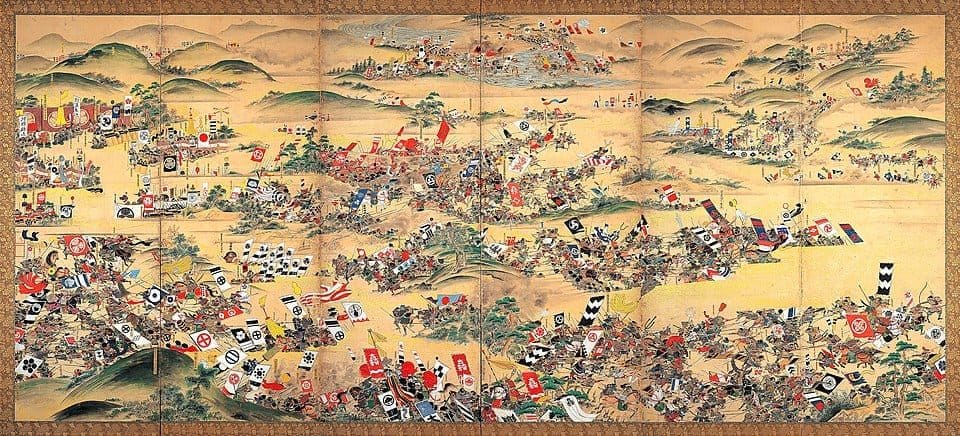
Samurai armies clashing in the fog at Sekigahara, 1600

In a narrow valley in central Japan, on a morning thick with fog, two vast armies of samurai met to decide who would rule a country. Sekigahara lasted a single day, and its outcome shaped Japan for the next two and a half centuries.

A country up for grabs

The great unifier Hideyoshi had died, leaving a young heir and a council of powerful lords. Two of them, Tokugawa Ieyasu in the east and Ishida Mitsunari in the west, gathered rival coalitions, and all of Japan was drawn toward a single reckoning at the crossroads of Sekigahara.

The armies in the fog

On the morning of 21 October 1600, tens of thousands of men faced each other in the mist. On paper the Western coalition held a strong position, wrapped around the smaller Eastern army. When the fog lifted and the fighting began, it was ferocious and, for hours, evenly matched.

The battle would not be decided by numbers, but by who could be trusted.

The betrayal

The Western coalition was held together by loyalty that some of its lords did not feel. On a hill sat Kobayakawa Hideaki with a large force, secretly in contact with Ieyasu. At the critical moment he turned his men against his own side, charging down into the Western flank. Other waverers followed him.

Collapse

The Western army, betrayed from within, folded. What had been a balanced battle became a rout, and by afternoon Ieyasu had won.

250 years of peace

Sekigahara made Tokugawa Ieyasu the master of Japan. Within a few years he was named shogun, founding a dynasty that would rule from Edo for over 250 years, an age of peace and isolation that shaped modern Japan. One misty morning, one betrayal, and the course of a nation was set.

Frequently asked questions

Why is the Battle of Sekigahara in 1600 considered so decisive?

The Battle of Sekigahara in 1600 lasted only a single day, yet its outcome shaped Japan for the next two and a half centuries. It made Tokugawa Ieyasu the master of the country and led within a few years to a shogunate that ruled from Edo for over 250 years.

What actually decided the Battle of Sekigahara in 1600?

The Battle of Sekigahara in 1600 was decided not by numbers but by loyalty. Kobayakawa Hideaki, secretly in contact with Ieyasu, turned his large force against his own Western side at the critical moment, and other waverers followed, collapsing the Western coalition.

Did the side holding the stronger position win at Sekigahara in 1600?

No. At Sekigahara in 1600 the Western coalition held the stronger position on paper, wrapped around the smaller Eastern army, but it was betrayed from within and routed. Tokugawa Ieyasu's Eastern army had won by the afternoon.

When and where was the Battle of Sekigahara fought, and who led the two sides?

The Battle of Sekigahara was fought on 21 October 1600 in a narrow valley in central Japan, between the Eastern coalition of Tokugawa Ieyasu and the Western coalition of Ishida Mitsunari.

What were the consequences of the Battle of Sekigahara in 1600?

The Battle of Sekigahara in 1600 made Tokugawa Ieyasu the master of Japan, and within a few years he was named shogun, founding a dynasty that ruled from Edo for over 250 years in an age of peace and isolation that shaped modern Japan.

Who won the Battle of Sekigahara?

The Battle of Sekigahara in 1600 was won by the Eastern coalition of Tokugawa Ieyasu, which defeated the Western coalition of Ishida Mitsunari after a betrayal from within the Western side. The victory made Ieyasu the master of Japan.

Decide Japan yourself

Sekigahara is one of 40 battles in Echoes of Battle, told scene by scene, with a real-time tactical mode in the works, and set on the ground that decided the fate of Japan.

Or support the app on Ko-fi ›