The Siege of Vienna, 1683: the charge that saved Europe

Early Modern · 12 September 1683 · Holy League vs the Ottoman Empire · ~7 min read · Updated Aug 2026

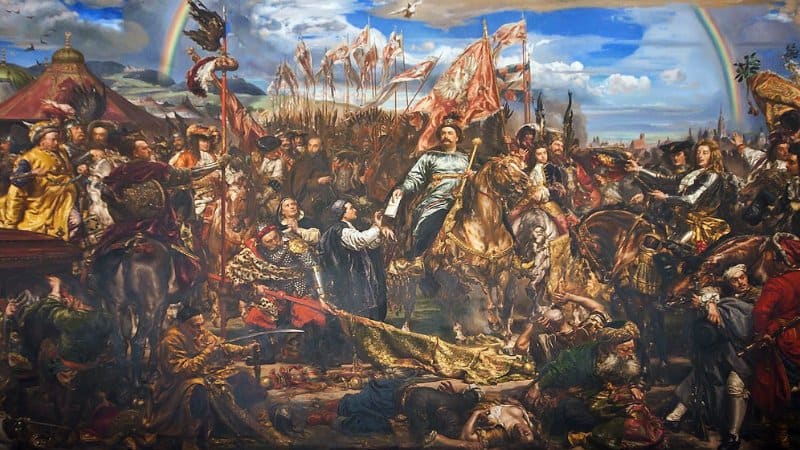
Winged hussars charging down the Kahlenberg into the Ottoman camp at Vienna, 1683

For two months in 1683, the fate of Central Europe hung on the walls of one city. When the relief finally came, it came down a wooded mountain at a gallop, and the Siege of Vienna became the moment the long Ottoman advance into Europe was finally turned back.

The Ottomans at the gates

A vast Ottoman army under Grand Vizier Kara Mustafa reached Vienna in July and ringed it in. Inside, a garrison and its citizens held a shrinking perimeter as Ottoman engineers dug beneath the walls and blew breach after breach. By September the city was starving and close to collapse.

The relief that almost came too late

A Holy League army of Imperial, German and Polish troops marched to save it, under the overall command of the Polish king Jan III Sobieski. They gathered in the hills above the city, on the wooded heights of the Kahlenberg, and on 12 September began fighting their way down toward the Ottoman camp.

The city had held for sixty days; it needed to hold for one more afternoon.

The great charge

Late in the day, with the Ottoman army worn from a day of fighting on two fronts, Sobieski launched the blow that made the battle famous: a massive cavalry charge led by the Polish winged hussars, often called the largest cavalry charge in history, thousands of horsemen thundering downhill straight into the heart of the enemy camp.

The rout

The Ottoman army broke and fled, abandoning its tents, guns and treasure. Sobieski, surveying the captured camp, sent word of the victory with a line echoing Caesar: we came, we saw, God conquered.

The tide turns

Vienna was the high-water mark of Ottoman expansion into Europe. From that autumn the frontier began, slowly, to move the other way, and the Habsburgs pushed south and east over the following decades. A siege that nearly ended in catastrophe became instead a turning point remembered across the continent.

Frequently asked questions

Why is the Siege of Vienna in 1683 remembered as the charge that saved Europe?

The Siege of Vienna in 1683 became the moment the long Ottoman advance into Europe was finally turned back, when a Holy League relief army broke the besiegers. It marked the high-water mark of Ottoman expansion into Europe.

Who led the relief of Vienna in 1683 and how did it arrive?

The relief of Vienna in 1683 was carried out by a Holy League army of Imperial, German and Polish troops under the overall command of the Polish king Jan III Sobieski. They gathered on the wooded heights of the Kahlenberg and on 12 September fought their way down toward the Ottoman camp.

What made the great cavalry charge decisive at Vienna in 1683?

Late in the day at the Siege of Vienna in 1683, with the Ottoman army worn from fighting on two fronts, Sobieski launched a massive cavalry charge led by the Polish winged hussars, often called the largest cavalry charge in history. Thousands of horsemen thundered downhill into the heart of the enemy camp, and the Ottoman army broke and fled.

How close did Vienna come to falling in 1683?

During the Siege of Vienna in 1683 the city held a shrinking perimeter for about two months as Ottoman engineers blew breach after breach, and by September it was starving and close to collapse. The relief arrived just in time, after the city had held for sixty days.

What were the strategic consequences of the Siege of Vienna in 1683?

After the Siege of Vienna in 1683 the frontier slowly began to move the other way, and the Habsburgs pushed south and east over the following decades. A siege that nearly ended in catastrophe became instead a turning point remembered across the continent.

Who won the Battle of Vienna?

The Battle of Vienna in 1683 was won by the Holy League army of Imperial, German and Polish troops under the Polish king Jan III Sobieski, which broke the besieging Ottoman army of Grand Vizier Kara Mustafa. The Ottoman army broke and fled, abandoning its camp.

Lead the relief yourself

Vienna is one of 40 battles in Echoes of Battle, told scene by scene, with a real-time tactical mode in the works, and set on the ground where the Ottoman advance was stopped.

Or support the app on Ko-fi ›